Age Spots vs. Sun Spots: What’s the Difference and Can They Be Removed?
If you have noticed small brown spots appearing on your face, hands, shoulders, or other areas that receive regular sun exposure, you may wonder whether you are looking at age spots, sun spots, or something else entirely. These terms are often used interchangeably, which can make it difficult to understand what is actually happening beneath the surface of your skin.
The good news is that many common forms of sun-related pigmentation are harmless and can be improved with professional cosmetic treatments. However, not every brown spot is simply an age spot or sun spot. Some spots can resemble harmless pigmentation but may require evaluation by a medical professional.
Are Age Spots and Sun Spots the Same Thing?
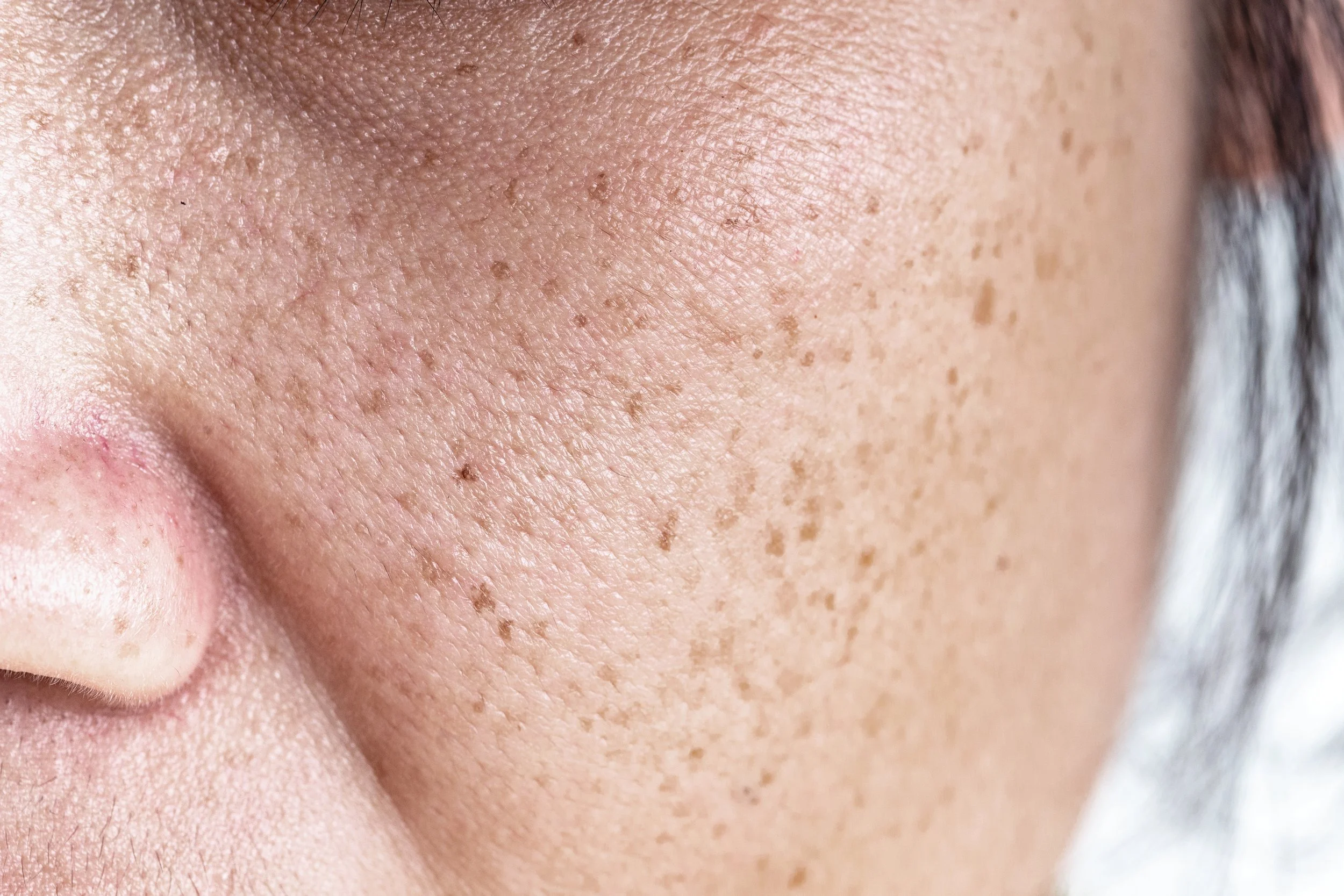
In everyday skincare conversations, age spots and sun spots are often used to describe the same type of flat, brown pigmentation, medically known as solar lentigines. While they are associated with getting older, cumulative UV exposure is a major factor. Over time, repeated sun exposure can cause the skin to produce more melanin, leading to areas of lasting discoloration.
The term "sun spot" can sometimes refer to other types of sun-related skin changes, including actinic keratoses, which are rough or scaly growths caused by chronic UV damage. When discussing cosmetic treatments, however, sun spots typically refer to flat areas of brown pigmentation caused by sun exposure.
What Are Age Spots?
Age spots are typically flat, well-defined areas of skin discoloration that range from light tan to brown. They often develop on areas that have experienced years of sun exposure, including the face, forehead, cheeks, hands, arms, shoulders, and upper chest.
These spots can vary in size and may appear individually or in clusters. Unlike freckles, which may fade when sun exposure decreases, age spots tend to be more persistent. The American Academy of Dermatology's information on age spots notes that other conditions, including actinic keratoses and certain types of skin cancer, can look similar to age spots. For this reason, new, unusual, or changing spots should be evaluated before cosmetic treatment.
What Causes Sun Spots?
When "sun spots" is used to describe solar lentigines, the primary factor is cumulative UV exposure.
The sun produces UVA and UVB radiation. Repeated exposure can contribute to premature skin aging and pigmentation changes. UVA radiation is particularly associated with photoaging and can contribute to the development of age spots over time.
Your skin may not show all of the effects of sun exposure immediately. Instead, pigmentation can become more noticeable years later. This means a brown spot appearing today may be related to cumulative exposure from years earlier.
How Can You Tell the Difference?
There is a lot of overlap between what people call age spots and sun spots. In many cases, these terms refer to similar types of flat, sun-related pigmentation. The more important difference is whether a spot has characteristics that may require medical attention.
Typical age or sun spots are usually flat, smooth, tan to brown, well-defined, and found on areas frequently exposed to the sun. They also tend to remain relatively stable over time. Actinic keratoses, however, may feel rough or scaly and can appear red, pink, brown, skin-colored, or gray.
Can Age Spots or Sun Spots Fade on Their Own?
Some pigmentation may fade over time, but true age and sun spots typically persist rather than disappearing on their own. Freckles and temporary pigmentation may become lighter with less sun exposure, while established age spots are more likely to remain.
Continued sun exposure can darken existing spots and contribute to new ones. If you have persistent brown spots you would like to improve, professional treatments can provide a more targeted approach to achieving a more even skin tone.
How Are Age Spots and Sun Spots Removed?
The right treatment depends on the type of pigmentation, your skin type, the location of the spots, and whether you have other concerns such as redness, uneven texture, or signs of photoaging.
BBL Photofacial
BroadBand Light, or BBL, is one option used to address visible pigmentation and sun damage.
At Permanent Touch Cosmetics, BBL Photofacial treatment uses light-based technology to target concerns including brown spots, sun damage, redness, and uneven skin tone. Treatments can be customized based on individual skin type and aesthetic goals.
BBL is commonly performed on areas such as the face, neck, chest, and hands. Because pigmentation is only one component of the overall appearance of sun-damaged skin, treatment may also be considered as part of a broader skin rejuvenation plan.
MOXI Laser
Another option is MOXI, a fractional laser treatment designed for skin rejuvenation and concerns such as uneven tone and texture.
MOXI and BBL work differently, so one should not automatically be considered a replacement for the other. Your skin concerns, treatment goals, and skin type all play a role in determining which technology may be appropriate.
Other Professional Treatments
Depending on the diagnosis and your individual needs, dermatologists may also use treatments such as chemical peels, cryotherapy, topical medications, or other laser-based procedures for certain types of pigmentation or precancerous lesions.
Importantly, cosmetic treatments should not be used to treat a spot that has not been properly identified. A spot that is actually an actinic keratosis or skin cancer requires medical care rather than cosmetic pigmentation treatment.
What About Skincare Products?
Some topical skincare products can help improve the appearance of uneven pigmentation over time. Depending on the cause, ingredients used in professional skincare routines may include pigment-modulating or exfoliating ingredients.
However, skincare products generally require consistent use and patience. A professional can help determine whether an at-home skincare routine, an in-office treatment, or a combination makes sense for your skin.
How Can You Prevent Age Spots and Sun Spots?
Even if you have already developed pigmentation, daily sun protection remains one of the most important steps you can take.
Sunscreen should be applied to exposed skin and reapplied approximately every two hours when outdoors, as well as after swimming or sweating.
Other helpful sun-protection habits include:
Wearing a wide-brimmed hat when outdoors
Choosing clothing that covers exposed skin
Seeking shade when possible
Avoiding intentional tanning
Wearing UV-protective sunglasses
Applying sunscreen to commonly forgotten areas such as the ears, neck, hands, and tops of the feet
Reapplying sunscreen consistently during extended outdoor activities
When Should You Have a Spot Checked by a Medical Professional?
Not every brown spot is simply a cosmetic concern. A spot should be evaluated by a dermatologist or other qualified medical professional if it is new, changing in size, shape, or color, asymmetrical, has an irregular border or multiple colors, or begins to bleed, itch, hurt, or develop a rough or raised texture.
Pay close attention to spots that are noticeably evolving. If you are unsure whether a spot is an age spot, sun spot, or something else, it is best to have it medically evaluated before pursuing cosmetic treatment.
At Permanent Touch Cosmetics, we work in-house with a board-certified dermatologist, allowing our clients to be seen and evaluated when necessary before proceeding with cosmetic treatment.
Frequently Asked Questions
Are sun spots dangerous?
If by "sun spots" you mean flat solar lentigines, these are generally harmless. However, the term can sometimes be used for precancerous actinic keratoses. A medical professional should evaluate any new, rough, scaly, changing, or unusual spot.
Can age spots disappear naturally?
True age spots typically persist rather than disappearing completely on their own. Some pigmentation can fade, but persistent solar lentigines may require professional treatment if you want them significantly lightened.
Does sunscreen prevent age spots?
Consistent sun protection can help reduce additional UV-related skin damage and may help prevent new pigmentation from developing.
Is MOXI or BBL better for pigmentation?
MOXI and BBL use different technologies and may address different aspects of skin rejuvenation. The appropriate treatment depends on your skin type, pigmentation, texture concerns, and overall goals. A personalized consultation can help determine which approach is appropriate.
Treating Sun-Related Pigmentation on Long Island
Age spots and sun-related pigmentation are common concerns, especially after years of sun exposure. Whether you are noticing a few brown spots on your hands or uneven pigmentation on your face, professional treatment options can help improve the appearance of your skin.
At Permanent Touch Cosmetics, treatments such as BBL HEROic and MOXI can be tailored to your individual skin concerns and goals. If you are ready to address unwanted pigmentation and explore your treatment options, schedule an appointment with us at our Woodbury, NY location on Long Island.